
Mastering Human Arm Anatomy for Illustrators
This guide provides essential techniques for drawing anatomically accurate human arms by focusing on skeletal proportions and muscle placement. It covers key structural landmarks and how to effectively render complex limb movements.
Understanding Arm Proportions
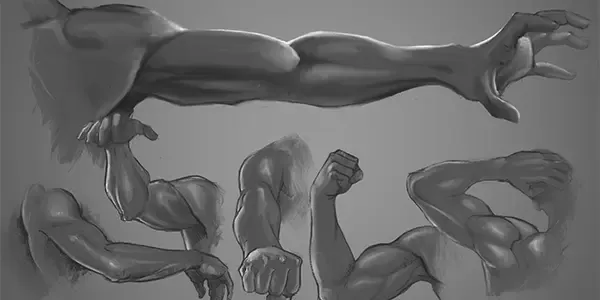
To draw realistic arms, divide the limb into three distinct segments: the upper arm from shoulder to elbow, the forearm from elbow to wrist, and the hand. Using a twelve-unit scale, the upper arm occupies five units, the forearm four, and the hand three, ensuring the total length aligns with the body's overall height. ## Structural Landmarks and Musculature Constructing an arm requires identifying subcutaneous bony landmarks like the collarbone, elbow, and the head of the ulna to anchor your sketch. By mapping the primary muscle groups such as the biceps, triceps, and deltoids, you can create a credible foundation that maintains its shape during various poses. ## Managing Movement and Rotation When depicting rotation, remember that the radius bone pivots ar