
Mastering Human Anatomy for Character Illustration
This guide provides a foundational overview of human skeletal and muscular structures to help artists improve their character drawings. It covers essential proportions and anatomical landmarks for the torso and limbs.
Understanding the Skeletal Framework
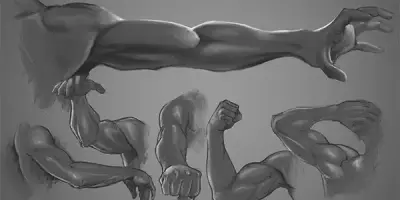
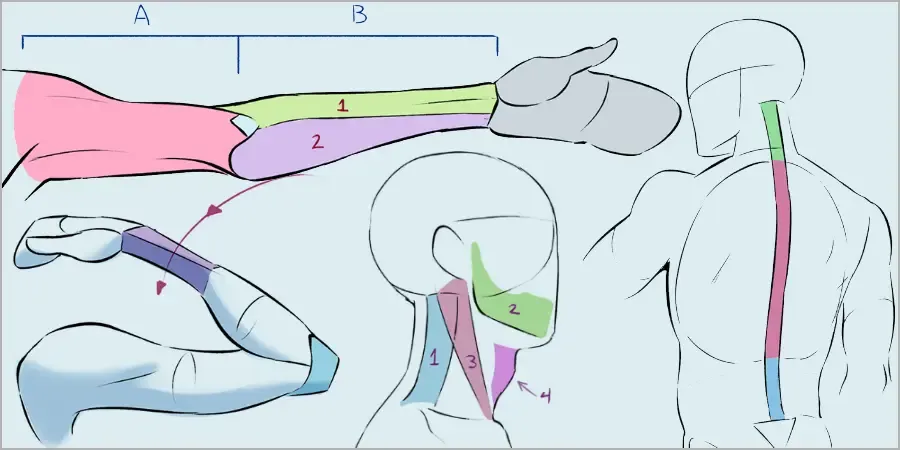
The human spine acts as a curved support system, divided into cervical, thoracic, and lumbar sections that dictate torso movement and posture. Key structures like the rib cage, clavicles, and pelvis serve as primary anchors for the limbs and define the overall silhouette of the figure. ## Limb Mechanics and Proportions Arms and legs rely on complex bone articulations, such as the radius and ulna crossing to allow wrist rotation, which must be understood to avoid unrealistic poses. While standard proportions suggest an adult height of seven to eight heads, artists should use these as a baseline rather than a strict rule to maintain character individuality. ## Achieving Balance and Rhythm Legs should be drawn with a slight inclination rather than perfe